Recovery rides: what makes a good recovery route
A recovery ride is the easiest session in a training week, and the one most often ridden too hard. Your legs usually aren’t the problem. The route is: one climb, a headwind or a restart at every junction, and the easy spin becomes a tempo ride. This guide covers how easy a recovery ride should be and how to pick a route that lets it stay that way.
How easy is easy
A recovery ride is short, very easy pedalling. In power terms that’s below about 55% of FTP, the “active recovery” level in Andrew Coggan’s widely used power zones. By heart rate, it’s the bottom of your zones. By feel, you could hold a full conversation and could keep it up all day.
The point is to get some blood moving between hard days without adding fatigue. A useful rule: if it starts to feel like training, ease off. Riding below the target is fine. Riding above it is the thing to avoid.
Flat beats scenic
Climbs are where recovery rides go wrong. On a steep enough climb, the slowest speed you can balance at already takes more power than a recovery target allows. How steep depends on your weight, your FTP and your lowest gear. Short steep ramps are the worst, because you have to push over them.
Pick flat or very gently rolling roads. Valley floors, lakeshores, river paths and canal towpaths are typical. Descents don’t hurt the effort, but a long one on a cool day gets cold quickly at recovery speed.
Wind is a hidden climb
On a flat road a headwind does what a climb does: it asks for power just to keep moving. Check the forecast before you leave. Sheltered roads, through woods or along a valley, are worth a detour. If you have to ride into the wind, do it on the way out while you’re fresh, so the tailwind brings you home.
Few restarts, smooth surface
Every stop means a restart, and every restart is a small surge. One or two don’t matter. Thirty traffic lights through town add up to a string of short efforts. A route with long uninterrupted stretches lets you settle into a high, light cadence and stay there.
Surface matters for the same reason. Rough gravel and broken tarmac take more power at the same speed than smooth asphalt or hardpack. On a gravel bike, smooth gravel is fine. Save the rough tracks for another day.
Little traffic
A recovery ride should be relaxing. Quiet back roads and bike paths let you ride slowly without cars passing close, and you won’t feel pushed to speed up to keep pace with traffic. Riding early in the morning or at a quiet time helps.
Ride it by feel, not speed
Turn off average speed, or ignore it. With power, set a ceiling and stay under it. With heart rate, keep it in the bottom zone and expect a little lag. Without either, use feel: conversational, light pedals. Don’t join a group ride for a recovery day unless the group is going to ride easier than you.
A route where easy stays easy
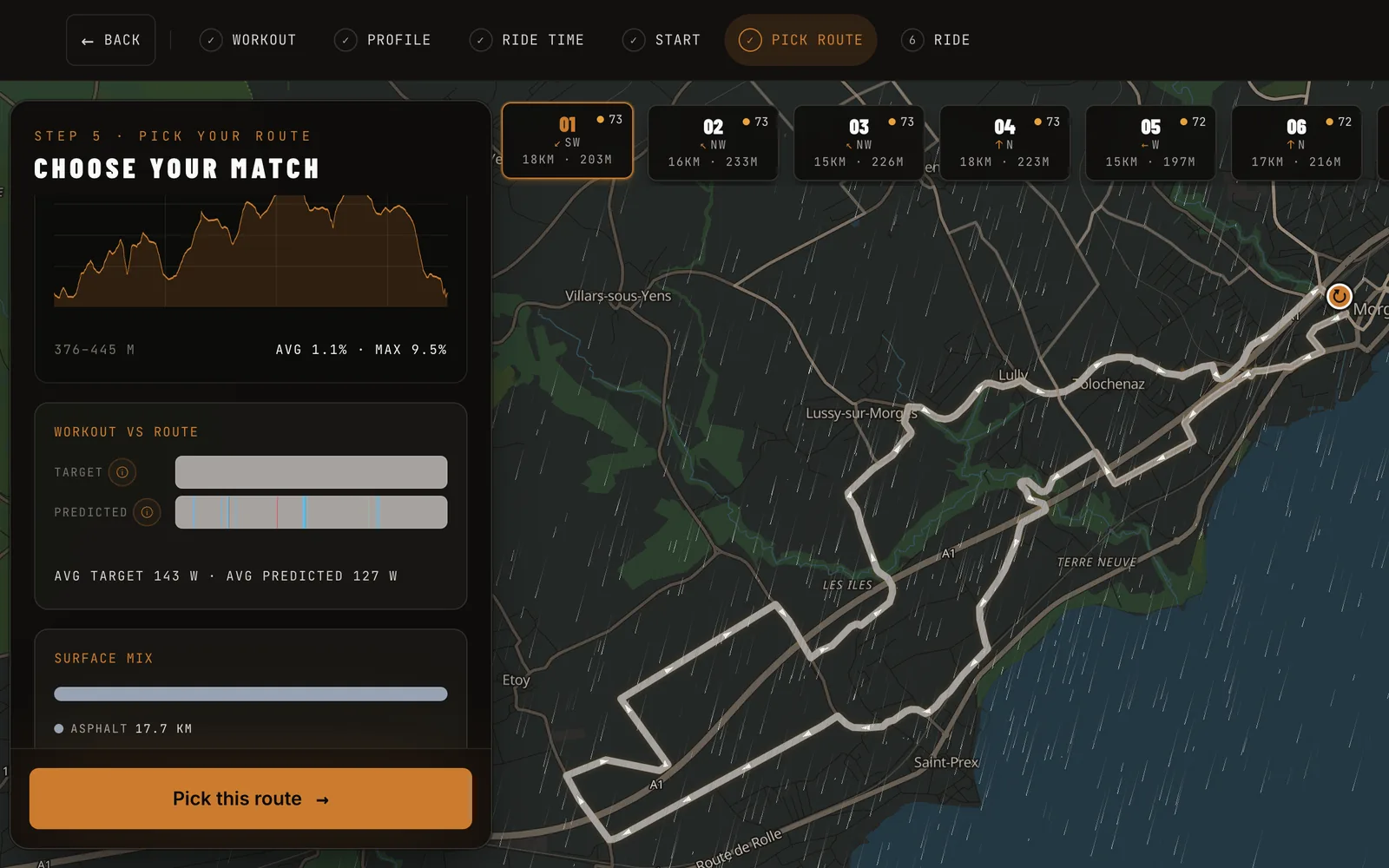
Gritmaps has a Recovery Spin in its built-in library: 45 minutes at about 50% of FTP at a high cadence, adjustable in 15-minute steps. There’s also the Gentle instant workout if you’d rather ride easy Zone 2. Route scoring treats easy riding as a ceiling. A route gets marked down where the terrain would force you above the target, like a climb too steep to ride easily, and riding below the target costs nothing. Wind is forecast for your start time, busy roads lower the score, and the Quiet roads profile keeps you on low-traffic lanes.
After the ride, the ride analysis counts easy stretches as on target as long as you stay in Zone 2 or below, so riding a recovery softer than planned never costs you. Generating routes is free. Create your free account and plan tomorrow’s easy spin.