Turn your commute into a training session
If you ride to work, the hours are already there. Turning them into training takes some planning, because a commute is a fixed line between two points: its length rarely matches the workout, and the first and last kilometres usually run through town. This guide covers which sessions fit a commute, where the efforts go, and what to do when the ride and the workout aren’t the same length.
Pick sessions that suit the commute
Most commutes suit endurance riding best. A steady Zone 2 ride works with stops, a backpack and normal clothes, and you arrive warm rather than wrecked. Tempo and sweet-spot blocks work if part of the route is open road. Short, hard sessions like VO2 max are harder to fit: they need a proper warm-up and clear road, and you arrive soaked.
The hard session often works better on the way home, when nobody’s waiting for you at the other end and a shower is close. Keep the morning ride easy.
Put the town in the warm-up and cool-down
The start and end of a commute are usually the slow parts: junctions, lights, crossings. That’s where the warm-up and cool-down belong, since they don’t need an unbroken effort. The efforts go on the middle stretch, out of town: a climb, a quiet road along the valley, a bike path without crossings.
Count minutes between stops on that stretch, not kilometres. A 10-minute tempo block needs about 10 minutes of road with nothing that makes you brake.
When the commute is longer than the workout
If the ride is longer than the session, ride the workout and spend the extra time easy, in Zone 2, before and after. A 45-minute tempo session on a 70-minute commute is fine, as long as the efforts land on the good part of the road. Don’t push the easy part up to “make use of it”. That’s how a commute turns into junk miles.
When the commute is shorter than the workout
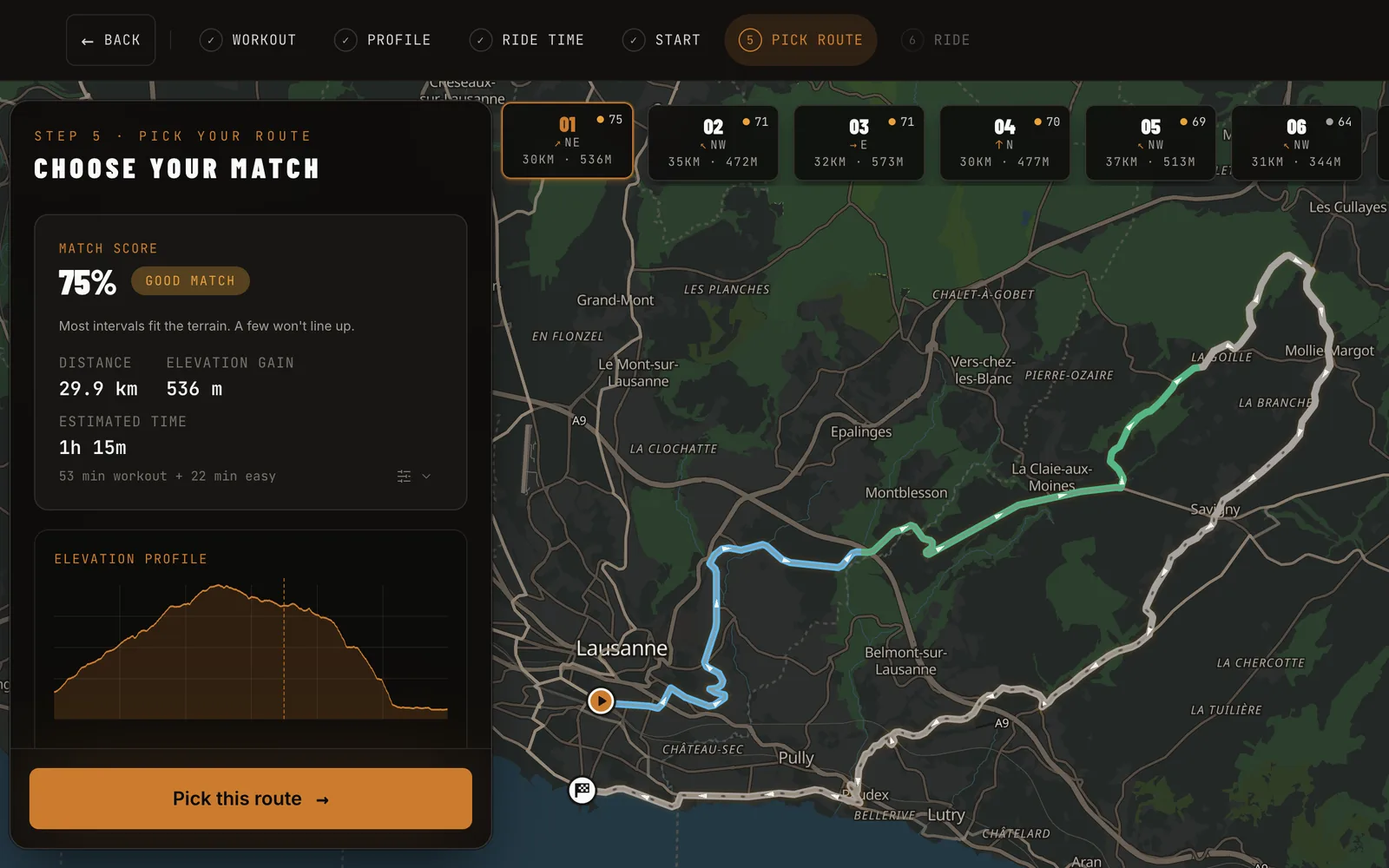
If the session is longer than the ride, take a detour. Leave the direct line where it’s least pleasant and add a loop in the middle, on the roads that suit the efforts. Plan it the evening before so you’re not deciding at the first junction. A detour also lets you pick the roads for the efforts, which a direct commute rarely does.
Wind and safety
Commutes go both ways, so the wind usually helps one leg and hurts the other. For a flat interval session, ride the efforts into the wind: you get the power at a lower speed, with more time to react.
Hard efforts take attention away from traffic, so keep them off the busy roads and ride a new route once at an easy pace before you use it for intervals.
One-way routes that fit the workout
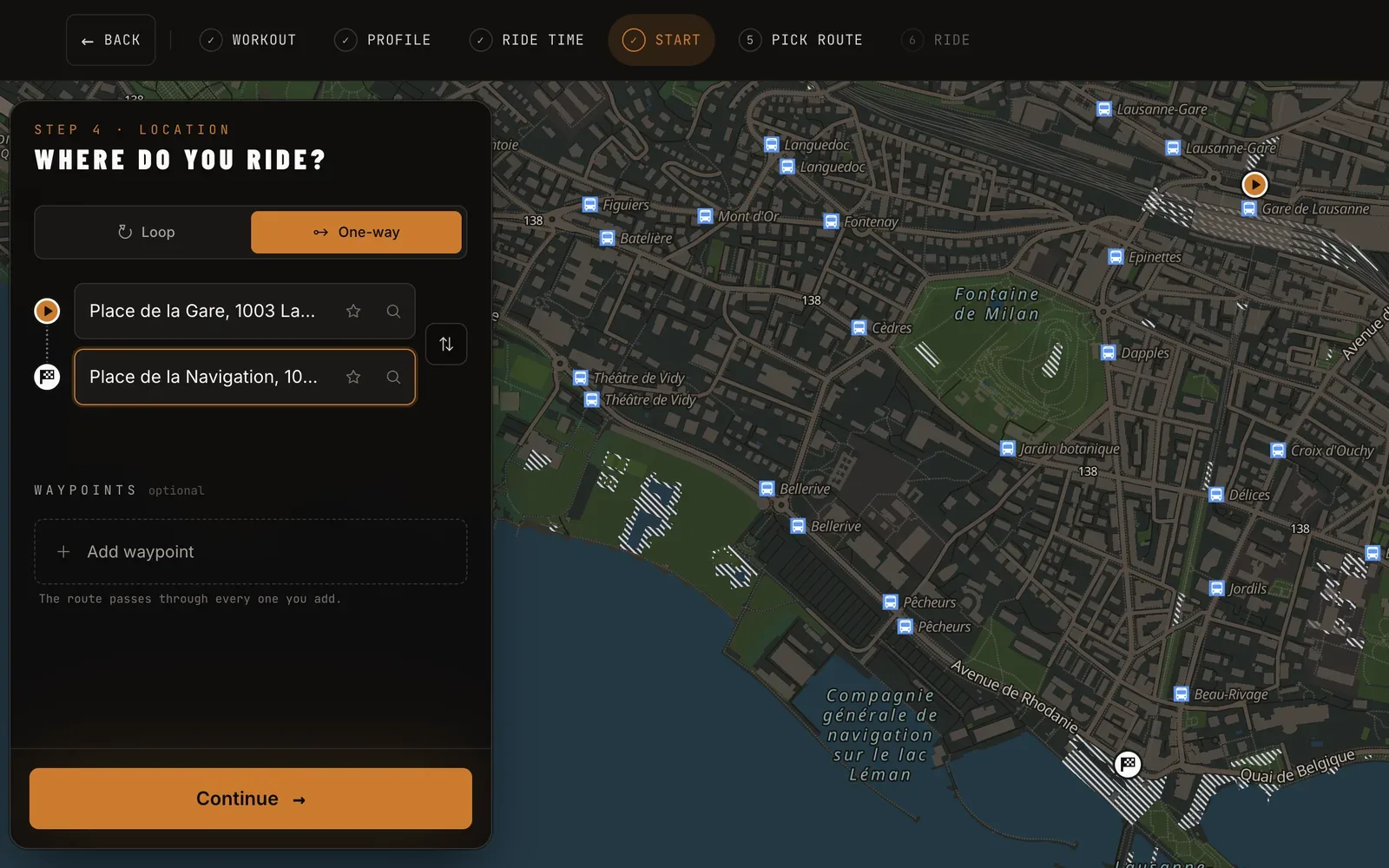
Gritmaps plans one-way rides as well as loops. On the start page, switch from Loop to One-way and pick your finish on the map, by search or from your favorites. Saving home and work as favorites makes it quick to set up, and Swap start and finish reverses it for the ride home. Set your departure time and the wind is forecast for that moment.
The Spare time setting works here too: pick how much easy riding to add around the workout, and that time is ridden in Zone 2. If the commute is shorter than the workout, the route takes a detour so the workout fits. Either way the efforts are placed on the parts of the road that carry them, and busy roads and stop-and-go sections are scored down, and junctions count against an interval when they break it up. Start and finish need to be at least 500 m apart. Generating routes is free. Create your free account and plan tomorrow’s ride in.